Bride’s side
In common family custom, the bride’s side receives the baraat and a father or chosen elder places the palla. Her relatives also coordinate her entrance and farewell.
Day 4
ਅਨੰਦ ਕਾਰਜ
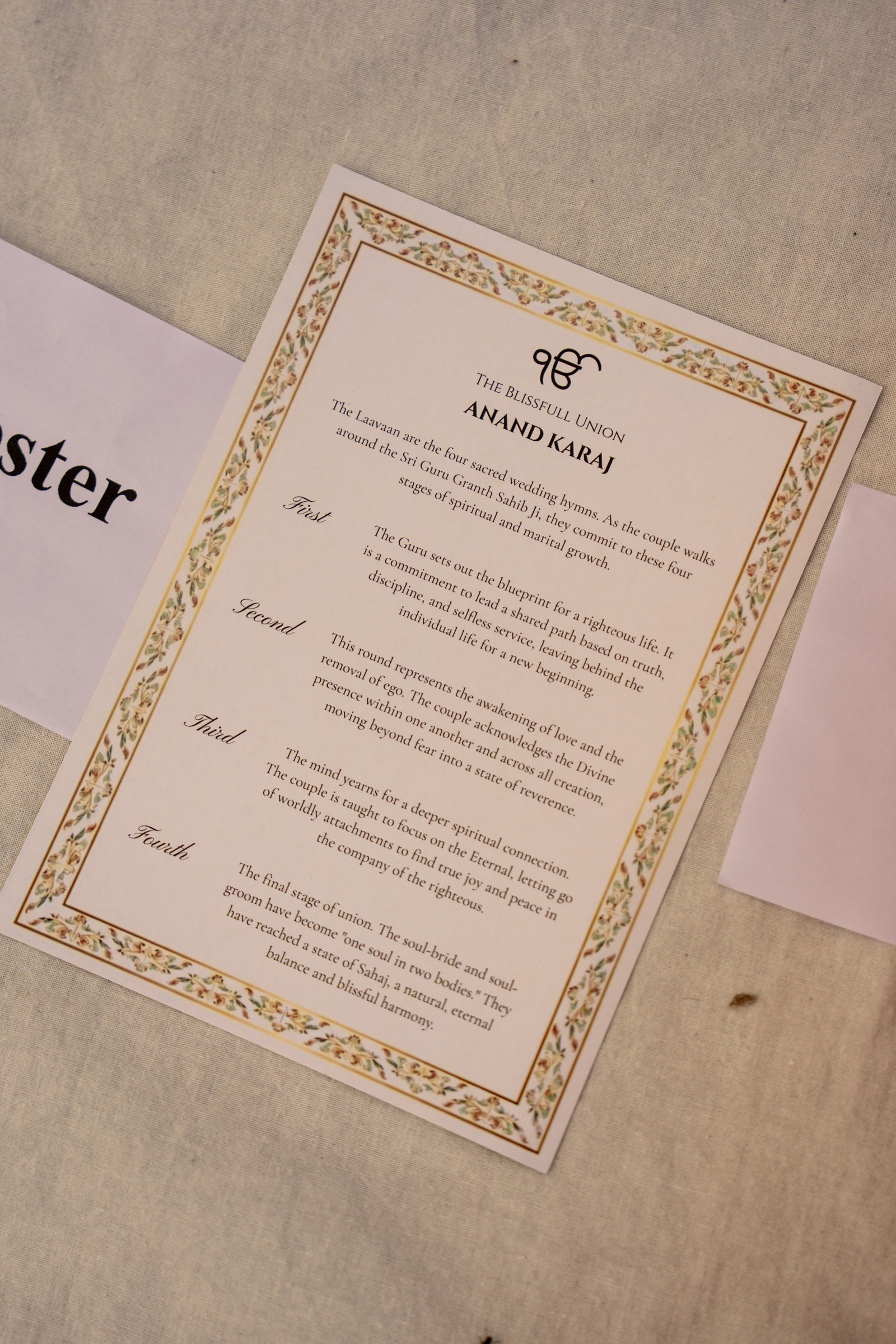
‘Blissful Union’, four laavaan around the Guru Granth Sahib.
The ceremony itself. The bride sits on the left of the groom, both facing the Guru Granth Sahib. After ardaas and shabads, the bride’s father places a saffron scarf on the groom’s shoulder; the other end is held in the bride’s hand, joining them. The four laavaan are then read. After each, the couple rises and walks clockwise around the Guru Granth Sahib, with the groom leading. After the fourth round, the raagis sing Anand Sahib, a final ardaas is offered, a hukamnama is read, and karah parshad is distributed to all attendees. Somewhere along the way the bride’s sisters steal the groom’s shoes (joota chhupai) and return them only after a playful shagun negotiation. After the langar, the Roti ceremony marks the bride’s first meal as a married woman: her in-laws present a covered platter with a cash gift, and she shares the meal with the groom.
Read the full guide: the Anand Karaj and the four LaavanA little history
The four laavaan were composed by Guru Ram Das in the 16th century. Each represents a stage of spiritual union. The marriage can be performed by any Amritdhari Sikh (someone who has undergone the Amrit initiation), not only a granthi. The Anand Karaj was formalised as a distinct Sikh wedding ceremony in the Anand Marriage Act of 1909, after decades of Sikh-reform advocacy to distinguish it from Hindu Vedic rites.
Who attends
Extended family, close friends, and community, though many diaspora families now keep the gurdwara list tighter and let the wider circle attend the reception only.
Typical guests
150–350 at the ceremony
Family roles
The religious meaning stays the same, but household roles can differ. Use this as a conversation starter, not a rigid rulebook.
Bride’s side
In common family custom, the bride’s side receives the baraat and a father or chosen elder places the palla. Her relatives also coordinate her entrance and farewell.
The groom’s side travels with the baraat, completes the welcome and Milni, and supports his entrance. During the laavan, the groom traditionally walks in front.
Plan together: The Anand Karaj joins the couple as spiritual equals before Guru Granth Sahib. Family-side customs surround the ceremony but do not make one side religiously senior.
What to plan
Samaan checklist
Avoid these mistakes
Real wedding inspiration
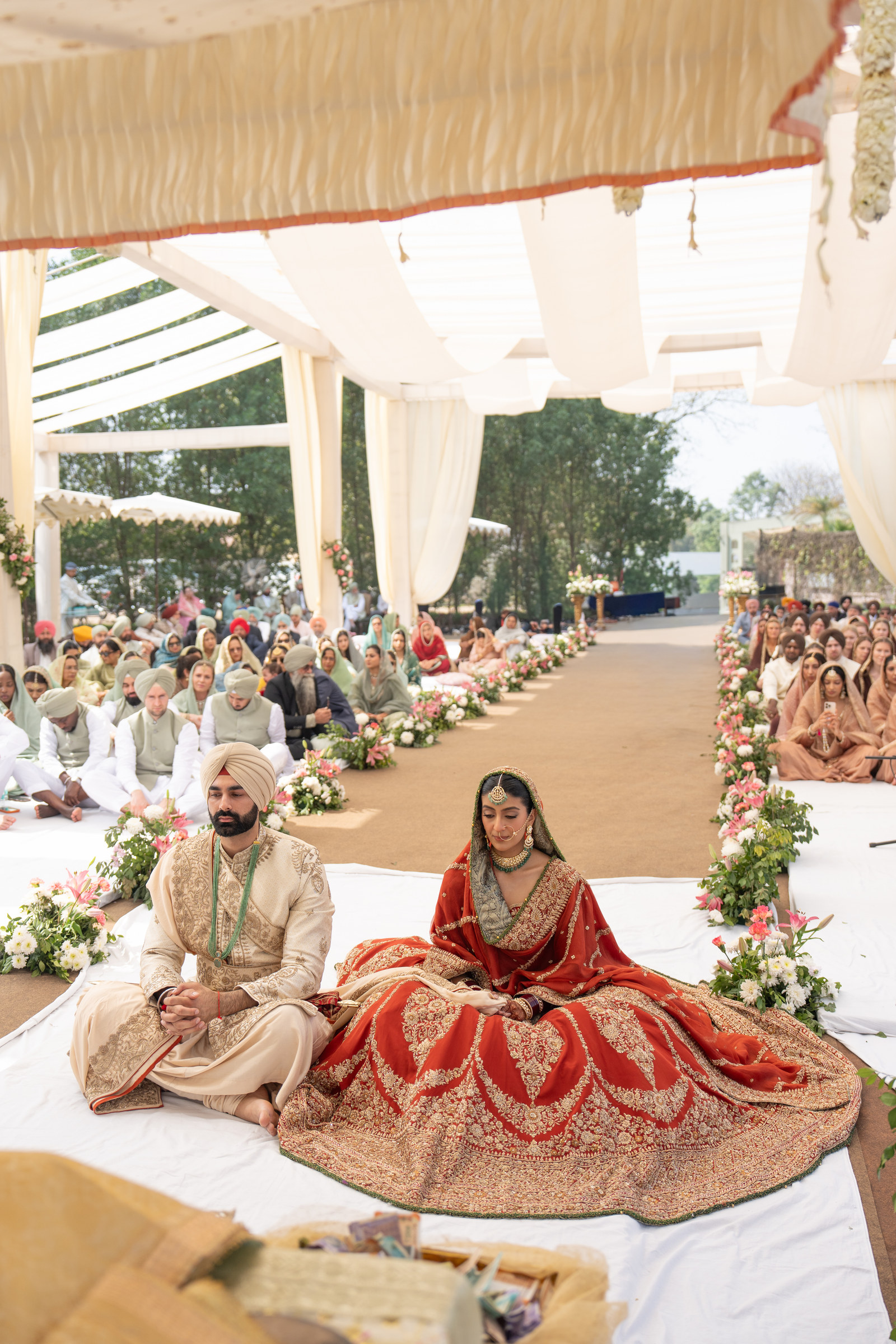
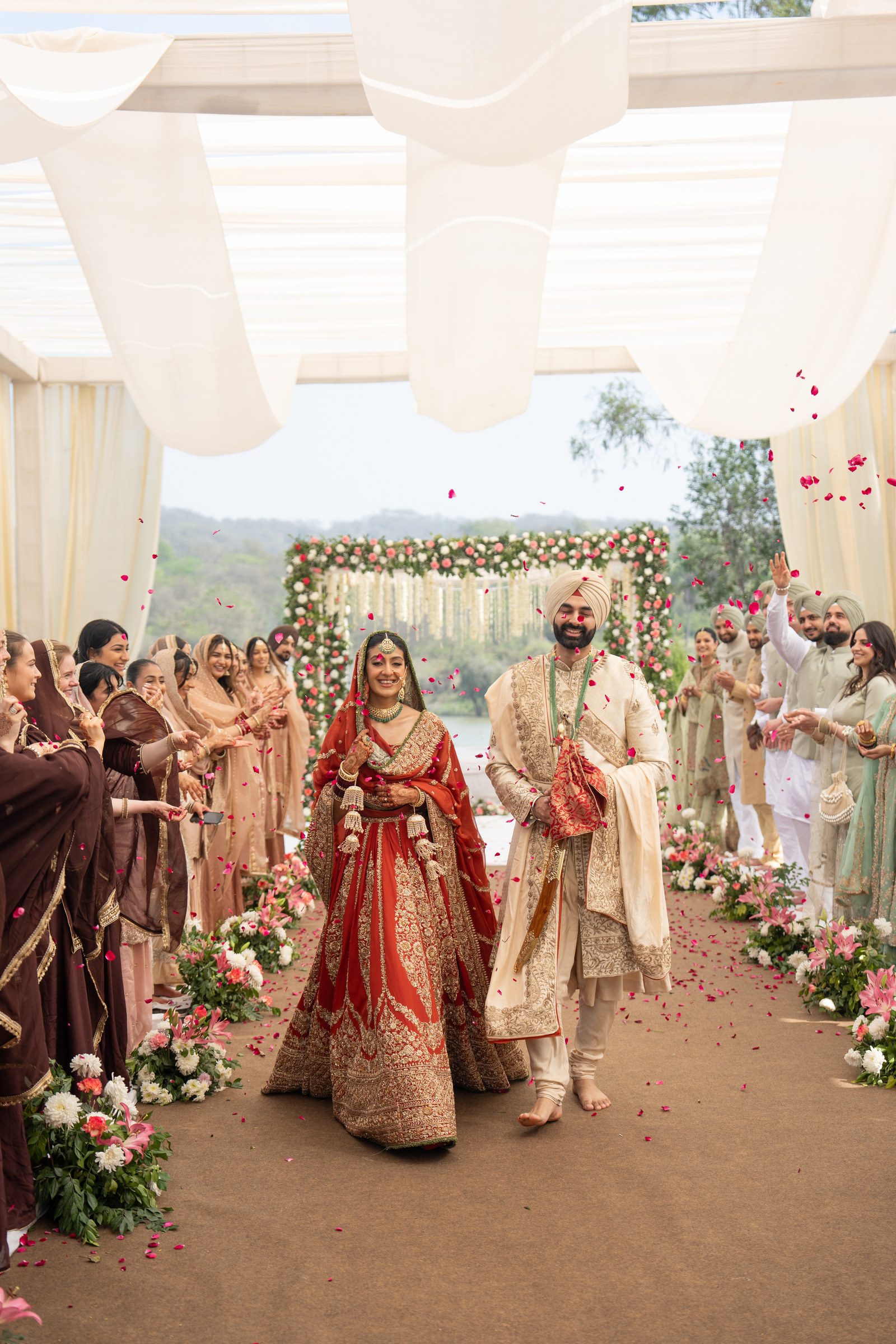
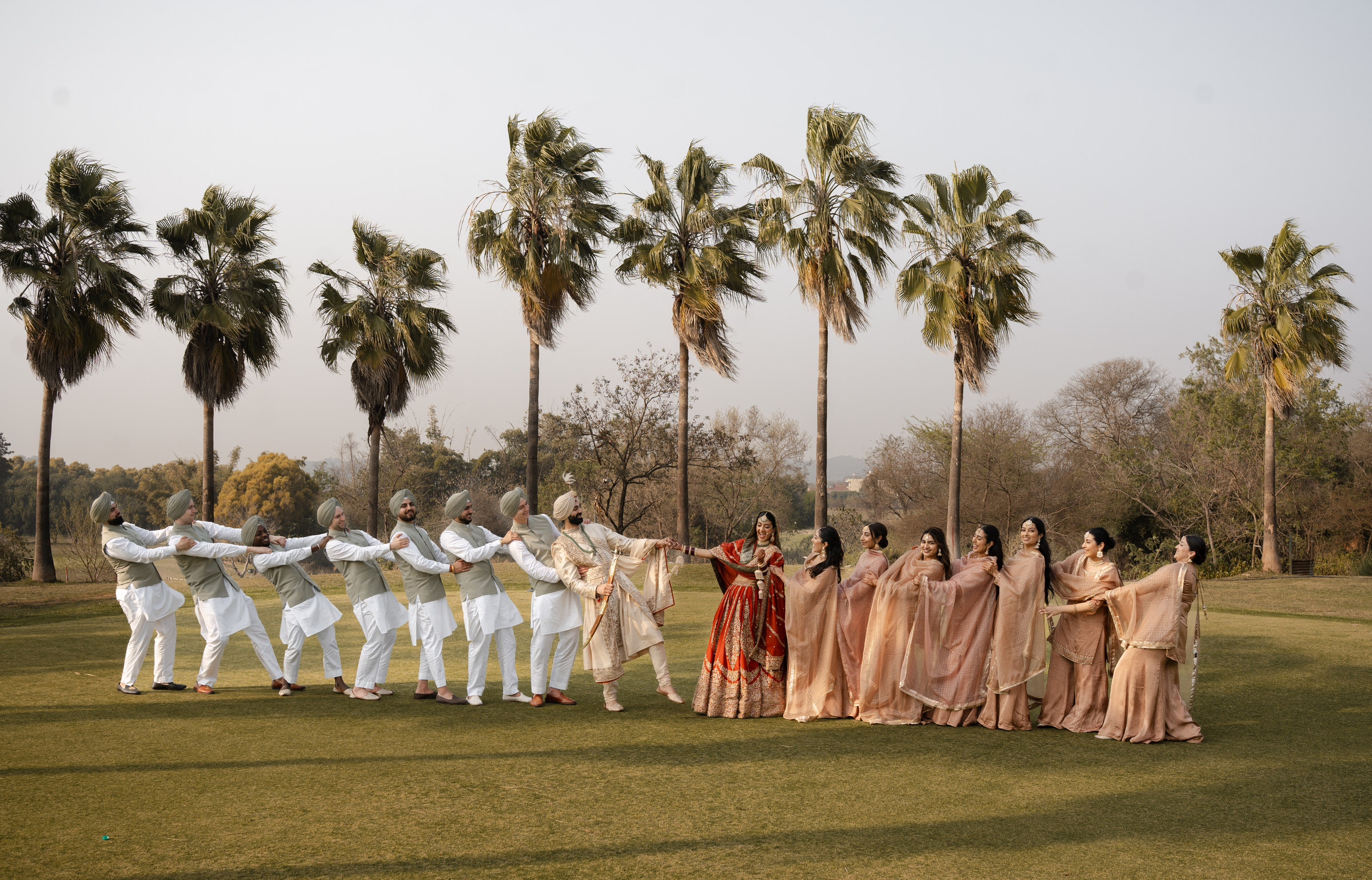
Use these real-wedding references to discuss the atmosphere, details and moments you want with your family and suppliers.
Common questions
The ceremony itself. The bride sits on the left of the groom, both facing the Guru Granth Sahib. After ardaas and shabads, the bride’s father places a saffron scarf on the groom’s shoulder; the other end is held in the bride’s hand, joining them. The four laavaan are then read. After each, the couple rises and walks clockwise around the Guru Granth Sahib, with the groom leading. After the fourth round, the raagis sing Anand Sahib, a final ardaas is offered, a hukamnama is read, and karah parshad is distributed to all attendees. Somewhere along the way the bride’s sisters steal the groom’s shoes (joota chhupai) and return them only after a playful shagun negotiation. After the langar, the Roti ceremony marks the bride’s first meal as a married woman: her in-laws present a covered platter with a cash gift, and she shares the meal with the groom.
Extended family, close friends, and community, though many diaspora families now keep the gurdwara list tighter and let the wider circle attend the reception only.
Typically 150–350 at the ceremony. Morning ceremony: baraat ~9 AM, Anand Karaj 1–2 hours, langar after; many families carry on to a same-day party at a second venue (bride’s prep from 5–6 AM).
Confirm sangat seating early. Many gurdwaras are floor-only Brief the photographer on doli timing. It’s easy to miss Have a coordinator dedicated ONLY to milni. It descends into chaos Don’t over-schedule the morning. Some gurdwara halls must clear by 11:30 AM, and on summer weekends multiple wedding parties share the langar hall Charge bride’s phone overnight. She won’t have time during the day Plan langar overflow. Guest counts always exceed RSVPs by 10–20% Agree a rough joota-chhupai amount beforehand so it stays playful
Bride’s side: In common family custom, the bride’s side receives the baraat and a father or chosen elder places the palla. Her relatives also coordinate her entrance and farewell. Groom’s side: The groom’s side travels with the baraat, completes the welcome and Milni, and supports his entrance. During the laavan, the groom traditionally walks in front. Together: The Anand Karaj joins the couple as spiritual equals before Guru Granth Sahib. Family-side customs surround the ceremony but do not make one side religiously senior.
Key items: Palki cover + cushions, Milni haar (8–12 pairs), Rumaal (50+), Pagh stock (50+ in wedding colours), Doli thaal with rice, coconut, kolli, Tikka + cash for milni.
Ready to plan?
Every checklist on this page is pre-filled in our Excel template, with budget tracking, vendor guides, and a day-by-day timetable.
See the Kits