Day 2 · Morning
Haldi / Maiyan
ਮਾਈਆਂ / ਵਟਣਾ
A cleansing turmeric ceremony. The very first maiyan is started by the mother.
Both the bride and groom undergo the same ceremony at their respective homes. Vatna (a paste of turmeric, mustard oil, and gram flour kneaded into a moist dough) is applied to face, neck, hands and feet while a red Phulkari dupatta is held above their heads by four female relatives. Once cleansed, the bride and groom are traditionally not permitted to leave home or change clothes until the wedding morning.
Read the full guide: the Maiyan (Haldi) ceremonyA little history
Traditionally performed at least three times: two days before, the morning before, and the wedding morning itself. The first maiyan is always started by the mother; afterwards, the mame (mother's brothers) bathe the bride or groom. The custom of staying indoors after vatna was rooted in protecting the bride and groom in the days leading up to the wedding. Today most leave for the salon after a quick bath, but the symbolism remains. Two samaan items carry their own stories: the gaana, a red thread tied on the bride’s left wrist and the groom’s right (and often on unmarried sisters and friends) for protection, which custom says should snap off naturally rather than be cut; and the ghadoli, the clay pot a sister-in-law fills with water from the gurdwara on the wedding morning to wash off the final vatna. When the maiyan ends, the mother steps over the rangoli, gathers it up as paste, and presses handprints onto the house wall, the traditional sign of a wedding house.
Who attends
Family and close female friends: the mother begins, then mame, then aunties, sisters and cousins take turns. The bride/groom remains seated on a peeri while everyone applies vatna and offers blessings.
Typical guests
40–80 people
What to plan
- Set up a peeri (low wooden stool) east-facing, with a fatti (rectangular wooden plank) for the feet
- Place coins beneath both feet under the fatti
- Lay a rangoli pattern in front of the peeri
- Prepare vatna fresh on the day (turmeric + mustard oil + gram flour, kneaded to a dough)
- Bride/groom outfit: bright yellow, something you’ll discard (vatna stains permanently)
- Phulkari dupatta to be held above their heads (with a coin tied to one corner)
- One Phulkari dupatta to drape on the wall behind for décor
- Dholki + Boliyan playlist or singer
- Plastic sheet under the bride/groom to catch drips
- Long shower + towels arranged for immediately after
- Announce the dress code to guests: yellows everyone can throw away afterwards
Samaan checklist
Avoid these mistakes
- Don’t use synthetic turmeric. Get fresh haldi or handmade ubtan, not packaged ready-made
- Wear something you’ll throw away. Vatna stains permanently
- Mother MUST start the first maiyan; if she can’t, find the eldest female elder
- Many gurdwaras don’t allow vatna inside. Host at home
- If the four dupatta-holders are unsteady, the dupatta drags through the vatna
Real wedding inspiration
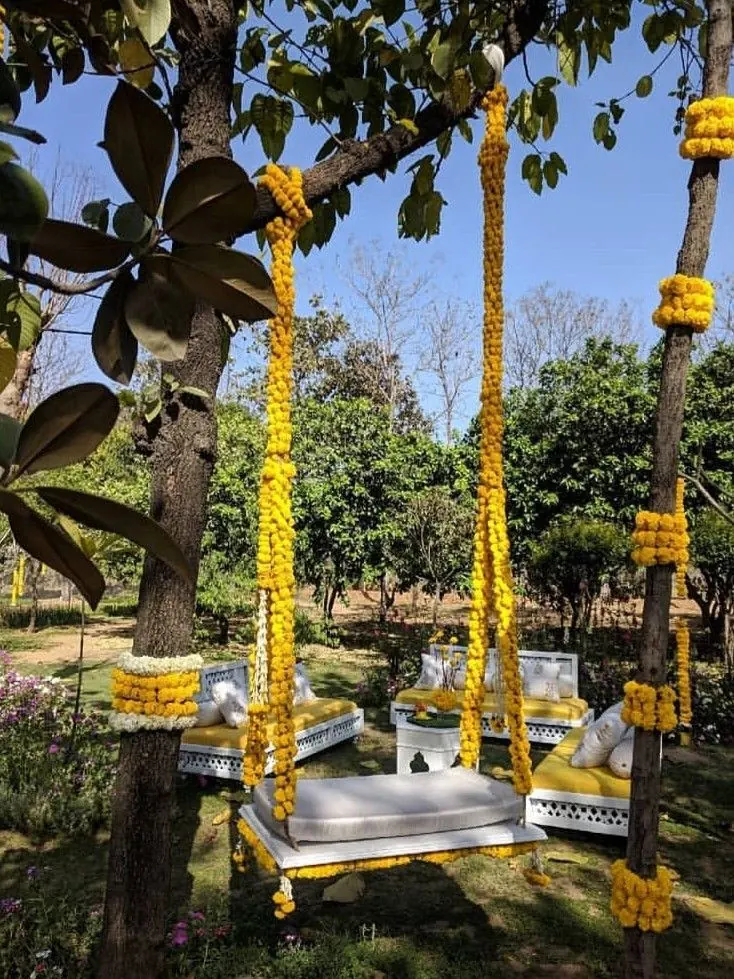
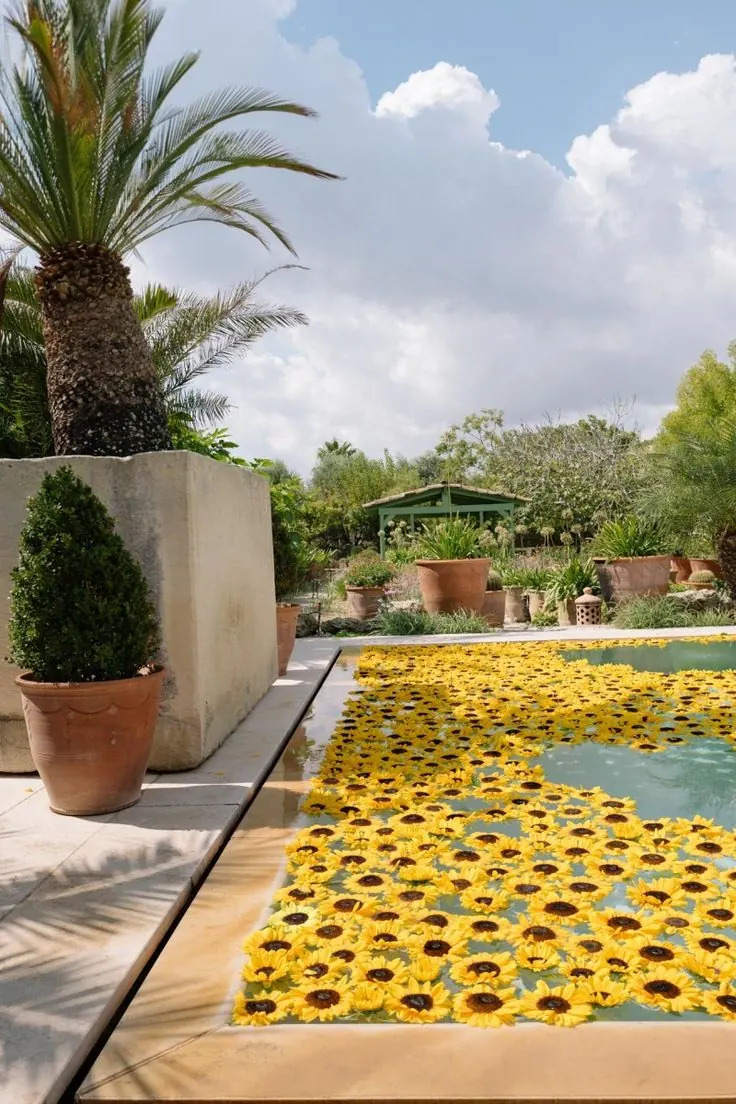
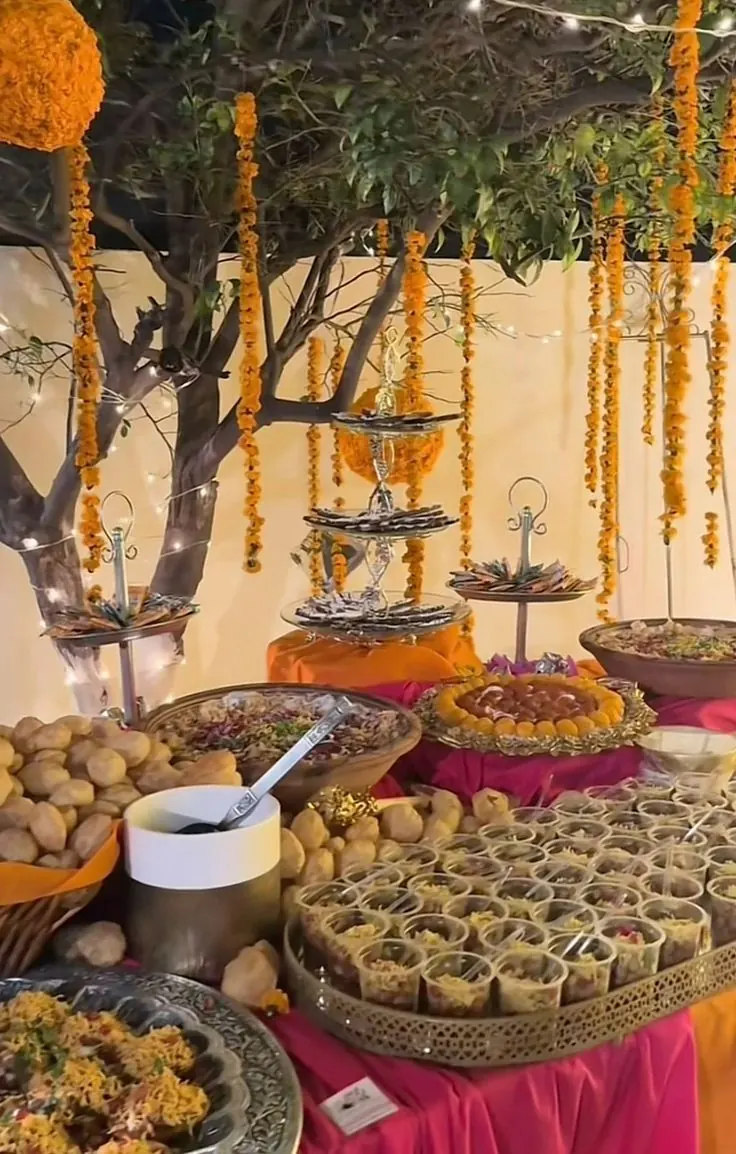
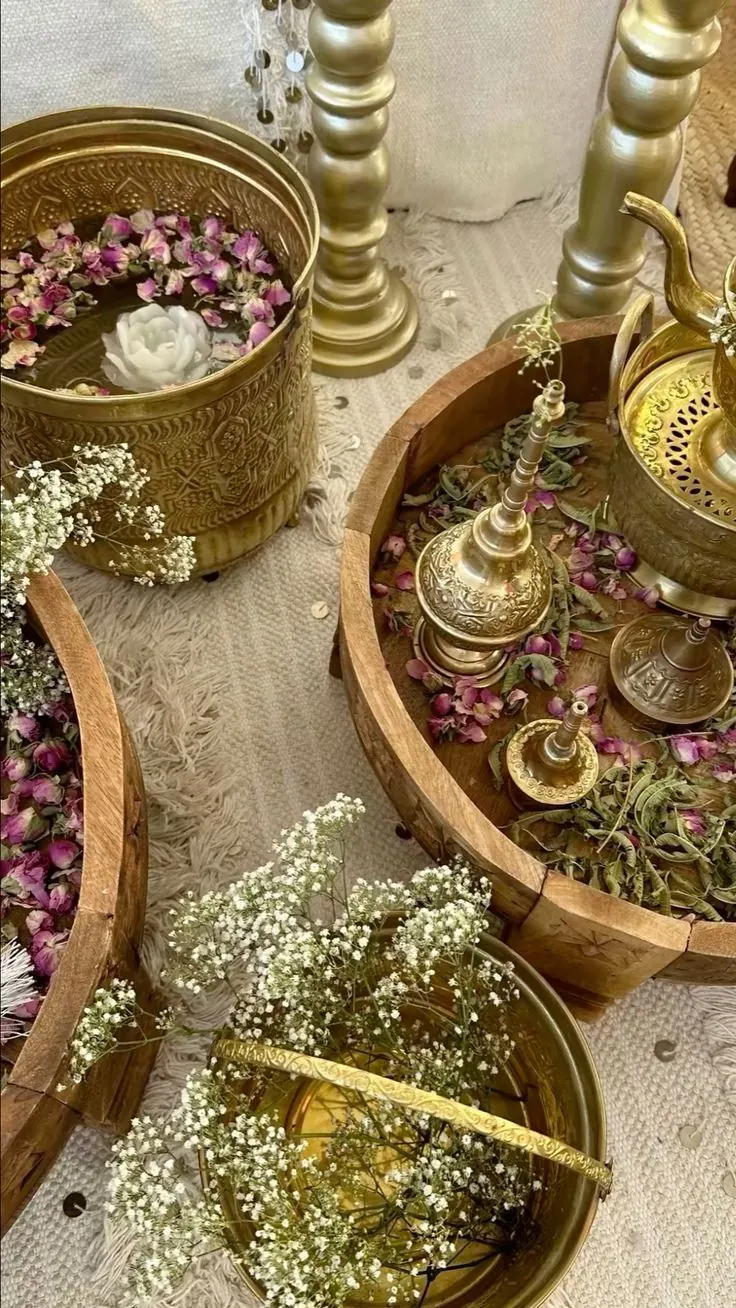
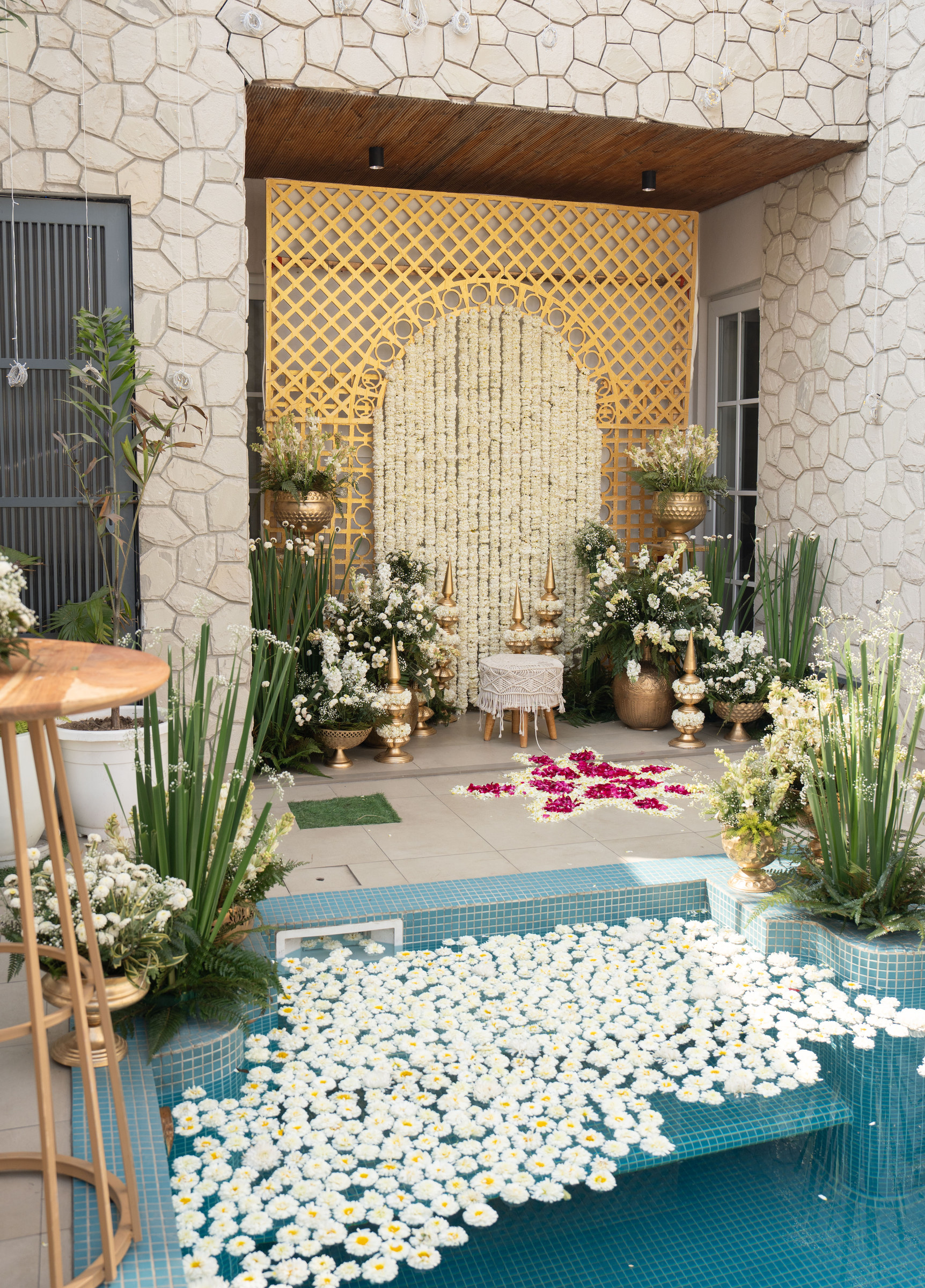
Use these real-wedding references to discuss the atmosphere, details and moments you want with your family and suppliers.
For guests: what to know
- Wear yellow or something you don't mind getting turmeric on. The vatna stains.
- Traditionally married women apply the paste to the bride or groom; others watch and bless.
- It's a daytime, intimate gathering for close family and friends.
Common questions
What is the Haldi / Maiyan ceremony in a Punjabi-Sikh wedding?
Both the bride and groom undergo the same ceremony at their respective homes. Vatna (a paste of turmeric, mustard oil, and gram flour kneaded into a moist dough) is applied to face, neck, hands and feet while a red Phulkari dupatta is held above their heads by four female relatives. Once cleansed, the bride and groom are traditionally not permitted to leave home or change clothes until the wedding morning.
Who attends the Haldi / Maiyan?
Family and close female friends: the mother begins, then mame, then aunties, sisters and cousins take turns. The bride/groom remains seated on a peeri while everyone applies vatna and offers blessings.
How many guests come to a Haldi / Maiyan, and how long does it last?
Typically 40–80 people. Morning brunch, 2–3 hours. Most families are done by early afternoon.
What are common mistakes to avoid at the Haldi / Maiyan?
Don’t use synthetic turmeric. Get fresh haldi or handmade ubtan, not packaged ready-made Wear something you’ll throw away. Vatna stains permanently Mother MUST start the first maiyan; if she can’t, find the eldest female elder Many gurdwaras don’t allow vatna inside. Host at home If the four dupatta-holders are unsteady, the dupatta drags through the vatna
What samaan do you need for the Haldi / Maiyan?
Key items: Rangoli (quantity depends on design), Flour (a handful), Rice (a handful), Peeri (low wooden stool), Fatti (rectangular wooden plank), Vatna: turmeric + mustard oil + gram flour kneaded to a moist dough, Gaaney (auspicious red thread), one per guest, Thaal (tray) for the vatna and samaan, Boiled rice and sugar mix (mithe chawal), Phulkari dupatta with coin tied to one corner, A few grass strands tied into a brush, A few drops of mustard oil (applied to the head with the grass brush), Small bowl for vatna, Baby oil, Dupattas for guests, Wheat (a handful), Ghadoli (small clay pot), Clay lid, Milk (to dip the chooda), Chooda (brought by the maternal uncle), Giveaways for guests.
Ready to plan?
Want this pre-filled for you?
Every checklist on this page is pre-filled in our Excel template, with budget tracking, vendor guides, and a day-by-day timetable.
See the Kits