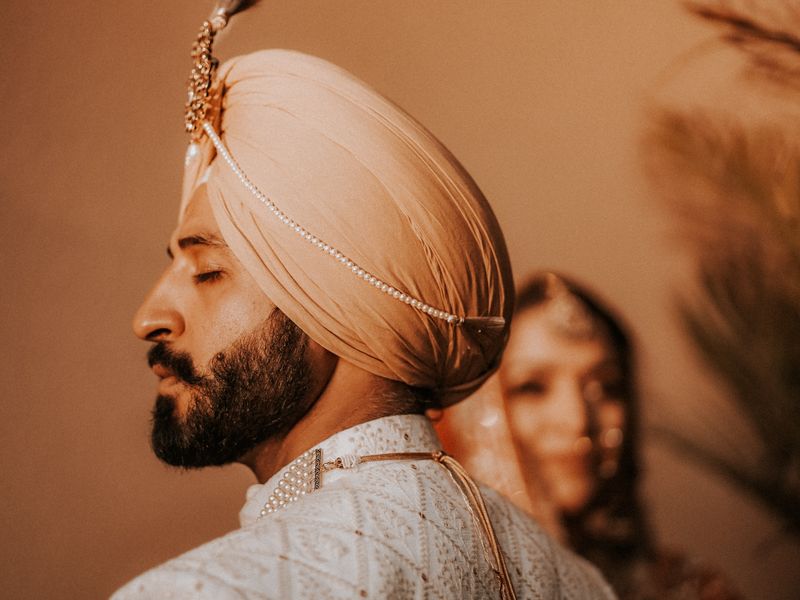
Family note: Customs differ by family, region and Gurdwara. Confirm your household's version with the couple instead of treating every tradition below as compulsory.
Quick answer: Whether you are the bride's father or the groom's father, your main job is to make decisions early and calmly. Know your Milni counterpart, give financial and transport jobs to named people, and protect the couple from family politics on the day.
Fathers are often given a ceremonial title but an undefined workload. One family expects Dad to host every guest; another expects him to hold all cash, pay every supplier and find every missing uncle. That is unsafe and guarantees he will be absent from the moments that matter.
The role shared by both fathers
Your common responsibility is to model cooperation. If you are relaxed about timing, gifts and status, other relatives usually follow. If you introduce a new demand on the wedding morning, ten people will treat it as urgent.
Before the week begins, settle the decisions only you can make. Then transfer the execution: venue calls to the coordinator, payments to a payment lead, transport to captains and Milni line-up to a caller.
Bride-side and groom-side duties
| Moment | Bride's father or equivalent | Groom's father or equivalent |
|---|---|---|
| Month before | Confirm host contacts, accessibility and final family approvals | Confirm baraat group, travel and groom-side approvals |
| Supplier payments | Approve budget and payment schedule; do not carry every balance | Confirm which groom-side expenses and tips are yours |
| Wedding morning | Keep home calm and make sure the bride-side transport leaves | Get the groom and key baraat relatives into vehicles on time |
| Baraat arrival | Be ready at the agreed welcome point | Stop dancing at the agreed time and bring the group forward |
| Milni | Greet the matching groom-side relative | Greet the matching bride-side relative |
| Anand Karaj | Support the couple and follow Gurdwara guidance | Support the couple and follow Gurdwara guidance |
| Doli / departure | Be present for the bride without managing luggage | Make sure receiving transport and luggage contacts are ready |
"Father" here can also mean the elder or guardian chosen by the couple. If a parent is absent, estranged or deceased, select the person who makes the couple feel safe. Do not announce a replacement publicly or force an explanation.
Milni without confusion
At Milni, corresponding relatives greet one another, often starting with fathers or senior representatives. The exact order differs. Some families include only a few pairs; others include mothers, Mama-jis, Chachas, Tayajis and siblings.
Get the final list in writing. It should show:
- Both people's full names and family relationship
- The order in which they are called
- Who holds garlands and whether garlands are being used
- Whether shagun is exchanged, and a uniform amount if it is
- The agreed substitute if someone is late or unable to attend
Keep the entrance short. A Milni delayed by relatives being fetched from cars affects the entire Anand Karaj schedule.
What to say
You do not need a formal speech. Look at the person, use their name if you know it, and say:
"Sat Sri Akaal ji. It is wonderful to bring our families together. Welcome."
On the groom's side, "Thank you for welcoming us" is equally appropriate. Do not discuss costs, guest numbers or unresolved promises in the line. Give those conversations a private time after the wedding.
The Anand Karaj is not a handover
The Sikh marriage ceremony centres the couple and the Guru Granth Sahib. It does not require Kanyadaan or a father "giving away" the bride. If relatives use that language, correct it gently before printed programmes or announcements repeat it.
Your conduct at the Gurdwara is the meaningful example: cover your head, remove shoes, arrive sober, silence the phone, sit respectfully and follow the sevadars. Do not ask the ceremony to pause for a missing guest or a photograph.
If you wear a pagh, arrange tying time well before departure. Keep a simple spare head covering available for any part of the day when the formal pagh is removed.
Money: approve it, do not carry all of it
Create a payment sheet with supplier, amount, due time, method, receipt and named payer. Whenever possible, pay by traceable bank transfer before or after the event. For cash that must be handed over:
- Put it in a labelled, sealed envelope.
- Record the amount and supplier.
- Give it to one payment lead.
- Ask for a receipt or written confirmation.
- Never leave the cash bag in a car, cloakroom or public bridal suite.
Shagun should have a separate recorder. Mixing incoming family gifts with outgoing vendor balances creates mistakes and unnecessary suspicion.
What to wear and carry
Choose clothing that remains comfortable through travel, floor seating and greetings. For the Gurdwara, shoulders and legs should be covered and a head covering is required. If you wear formal jutti, keep a comfortable alternative outside the prayer hall for later.
Your pocket should not replace the family office. Carry only:
- Printed one-page schedule
- Phone numbers for the overall coordinator and opposite-family contact
- Your assigned Milni envelope, if used
- Regular medicines, glasses and a small snack for travel
- Phone and a compact power bank
- Vehicle keys only if you are genuinely driving
Give contracts, multiple cash envelopes, spare outfits and other people's passports to their named owners.
Eight gotchas to prevent
- No substitute exists for a missing Milni relative. Agree one beforehand.
- The fathers are expected to settle a disagreement at the entrance. Move it to a private call with two decision-makers.
- The baraat schedule is treated as optional. Set a final dancing stop and appoint the person who calls it.
- One father carries every supplier payment. Use a payment lead and a written log.
- A speech is promised without telling the couple. Confirm speaker, length and content boundaries.
- Kanyadaan language appears in the programme. Review religious wording with the couple and Gurdwara.
- Health needs are ignored. Put medication, food and seating breaks into the actual timetable.
- You are placed in every photograph. Approve a short essential shot list and then return to the wedding.
The delegation map to make now
Name one person for payments, transport, Milni calling, guest accessibility, supplier questions, family photographs, valuables and luggage. Use the free wedding timeline for timings and the Milni planner if your family has dashboard access.
The strongest father-of-the-bride or father-of-the-groom performance is not a grand entrance. It is a day where no one has to chase Dad for an answer because the answer was agreed and delegated already.
Frequently asked questions
What does the father of the bride do at a Sikh wedding?
He often welcomes the groom's family, participates in Milni, supports host-side coordination, and is present for the bride during the wedding and Doli. He does not need to perform Kanyadaan as part of the Sikh ceremony.
What does the father of the groom do?
He often helps the groom and baraat arrive on time, meets his counterpart at Milni, and keeps the groom's family aligned with the arrival and Gurdwara plan.
What should fathers say at Milni?
A short "Sat Sri Akaal ji, it is wonderful to bring our families together" is enough. Warmth and punctuality matter more than a speech.
Does a Sikh wedding include giving the bride away?
The Anand Karaj does not require a father to give the bride away. Separate household customs should not be presented as Sikh religious requirements.
Make the handover real
Put the person's name beside the task and time
A role guide only works when the family agrees who owns each moment. Add the handovers to your timeline, then send each person only the information they need.