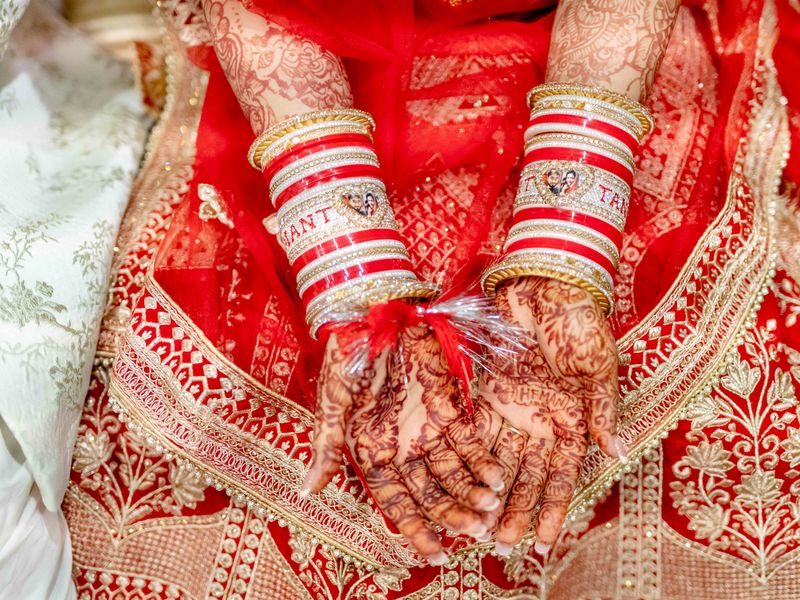
Family note: Customs differ by family, region and Gurdwara. Confirm your household's version with the couple instead of treating every tradition below as compulsory.
Quick answer: The mother of the bride is usually the bride's protector, family coordinator and emotional anchor. Your most useful work happens before anyone sees it: confirming who brings the choora and ceremony samaan, keeping relatives on time, and giving the bride enough quiet space to eat, dress and breathe.
There is no single rulebook for every Punjabi-Sikh family. Some customs are Sikh, some are Punjabi cultural traditions, and some belong only to a particular pind or household. Use this guide to start a family conversation, then confirm the actual plan with both sets of parents and the Gurdwara.
Your job in one sentence
Protect the bride's time while making sure the right person, item and decision reaches her at the right moment.
That does not mean doing everything yourself. Appoint one relative to answer vendor calls, one to gather people for photographs, and one to manage bags and gifts. If every question comes to you, you will miss the wedding while solving parking problems.
Duties by ceremony
| Moment | What you may own | What to confirm |
|---|---|---|
| Two weeks before | Family contact list, outfit readiness, bride's meal and rest plan | Who holds jewellery, documents, medicines and cash envelopes |
| Maiyan / Vatna | Keep the sequence gentle and the bride comfortable | Who prepares the vatna, dupatta, stool and clean-up towels |
| Choora | Welcome the maternal family and protect time for the ceremony | Which Mama-ji brings the choora, who has the kaleere, and whether a covering ritual is followed |
| Jaggo / Sangeet | Coordinate key family entrances and songs without overloading the bride | Performance order, sound check, transport home and an agreed finish time |
| Wedding morning | Keep the bridal room calm and release people on schedule | Hair and makeup finish time, photographer access, transport and emergency contacts |
| Anand Karaj | Help the bride arrive composed and appropriately covered | Gurdwara timings, head coverings, shoe arrangements and who sits with close family |
| Doli | Give the bride privacy and emotional support | Luggage handover, keys, phone, medication and who travels with her if needed |
Maiyan and Choora
At these home ceremonies, the temptation is to keep adding relatives and photo moments. Your role is to know when the bride has had enough. Ask the photographer to capture the core family first, keep a clean towel and water nearby, and make sure products used on her skin have already been tested.
For the Choora ceremony, the maternal uncles commonly play the central role. Confirm the actual family custom in advance: who purchases or presents the choora, whether it is purified in milk or another mixture, who covers the bride's eyes, and when the kaleere are attached. These are family customs, not requirements of the Anand Karaj.
Wedding morning and Anand Karaj
The best gift you can give the bride is a room with fewer people. Put one trusted person at the door. Keep the outfit, jewellery and essentials together the night before. Ask vendors to contact the designated coordinator, not the bride.
At the Gurdwara, practical respect matters more than elaborate staging: arrive at the agreed time, cover your head, remove shoes, dress modestly and follow the instructions of the Gurdwara sevadars. During the Anand Karaj, avoid directing people across the prayer hall or interrupting the ceremony for photographs.
What to say at Milni
Milni is a formal meeting of corresponding relatives from the two families. Traditionally it often centres senior men, but many families now include mothers, aunts and other important relatives.
You do not need a speech. A warm greeting is enough:
"Sat Sri Akaal ji. Welcome — we are very happy to have your family with us today."
If you are paired in the Milni, confirm the other person's name and relationship beforehand. Keep the exchange brief so the entrance does not become a queue. The family coordinator should hold the garlands and envelopes; you should not be searching through handbags as the baraat waits.
What to wear
Choose your outfit around movement, floor seating and the weather rather than photographs alone.
- For home events, wear something washable or protect delicate fabric during Maiyan.
- For the Gurdwara, cover shoulders and legs and bring a secure dupatta or head scarf.
- Test whether you can sit cross-legged, stand without help and walk on stairs.
- Wear shoes you can remove easily and label the bag that will hold them.
- Keep jewellery manageable if you will be hugging guests, carrying bags or helping the bride.
If changing outfits, assign one person to move and guard the second outfit. Do not leave jewellery or cash in a public bridal room.
Your small carry kit
Pack one compact bag, not a portable storeroom:
- Printed timeline and two emergency phone numbers
- Safety pins, fashion tape and a tiny sewing kit
- Tissues, blotting paper and unscented wipes
- Regular medicines, plasters and pain relief you already use safely
- Water, a simple snack and a phone power bank
- Spare head covering and hair pins
- A few labelled shagun envelopes, if you are responsible for them
- The bride's phone, keys or documents only if she has explicitly handed them to you
Keep ceremony samaan in separate labelled boxes. The person holding the choora should not also be responsible for the rings, legal documents and vendor payments.
Five gotchas to prevent
- No one has authority to end a ceremony. Agree who can say, "We have the photos; let her rest now."
- The bride becomes the help desk. Route questions to a family WhatsApp group or named coordinator.
- Maternal relatives receive different instructions. Send one written Choora and Milni plan to every Mama-ji involved.
- The Doli bag disappears. Label it, photograph it and give it to one named person in the receiving car.
- Emotion replaces hydration and food. Schedule a real breakfast and quiet ten-minute breaks; do not assume she will ask.
The handover list to make now
Write the name and phone number beside each of these: bride-room gatekeeper, vendor contact, photo gatherer, ceremony-samaan holder, shagun recorder, transport lead and Doli-bag holder. Add them to the wedding timetable, then share only the relevant section with each person.
The goal is not a mother who controls every detail. It is a mother who can be fully present because the details already have owners.
Frequently asked questions
What does the mother of the bride do at a Sikh wedding?
She usually coordinates the bride's side, protects the bride's preparation time, confirms ceremony items and people, welcomes guests, and supports the bride through the Anand Karaj and Doli. Exact customs vary, so write down your family's version.
Does the mother of the bride take part in Milni?
She can. Traditional line-ups often pair senior male relatives, while modern families may include mothers and other women. Agree the pairings and order with both families before the entrance.
What should she carry on the wedding day?
A small labelled essentials bag is more useful than carrying every ritual item. Keep the timeline, contacts, pins, tissues, medicines, water, charger, head covering and assigned envelopes together.
What should she wear to the Gurdwara?
Wear a modest outfit suitable for sitting on the floor, with a secure head covering. Comfort matters because you may be standing, walking and helping other people for many hours.
Make the handover real
Put the person's name beside the task and time
A role guide only works when the family agrees who owns each moment. Add the handovers to your timeline, then send each person only the information they need.