Family note: Customs differ by family, region and Gurdwara. Confirm your household's version with the couple instead of treating every tradition below as compulsory.
Quick answer: A sister is usually the couple's trusted fixer and emotional safe person. Choose two or three real responsibilities — such as the bridal-room door, sibling photographs and the emergency kit — instead of accepting every task relatives casually hand you.
Sisters often know what the couple wants and what the elders expect. That makes you a useful bridge, but it can also turn you into the wedding's invisible labour. A clear role lets you help without spending the entire week answering messages from vendors and cousins.
Your job in one sentence
Protect your sibling's decisions, solve the small problem in front of you, and send every larger problem to its named owner.
You are not automatically the planner, bridesmaid captain, social-media manager, babysitter and family peacekeeper. If the family needs those jobs, give them separate names.
Bride-side and groom-side duties
| Moment | Sister of the bride | Sister of the groom |
|---|---|---|
| Week before | Check bridal outfits, labels and essentials | Check groom's outfits, labels and essentials |
| Maiyan / Choora | Keep the bride comfortable and help with kaleere if asked | Join family customs without crowding the bride's ceremony |
| Jaggo / Sangeet | Coordinate one sibling performance or family song list | Coordinate one sibling performance or family song list |
| Wedding morning | Guard the bridal room and keep the schedule visible | Help the groom prepare and gather key baraat relatives |
| Baraat / Milni | Be ready to welcome or direct younger relatives | Keep cousins with the transport plan and clear the entrance on time |
| Anand Karaj | Sit close if requested; hold only assigned essentials | Guide unfamiliar guests and sit close if requested |
| Doli / welcome | Stay emotionally available and confirm the bride's bag | Help create a quiet, comfortable welcome for the bride |
The bridal or groom room
The preparation room needs a gatekeeper. If that is you, keep a short approved access list: couple, parents, photographer at agreed times, hair or turban team, and one coordinator. Everyone else can greet the couple later.
Put each outfit in one labelled garment bag with its matching jewellery or accessories list. Photograph the complete layout the night before. For the bride, check the dupatta pins, choora, kaleere, shoes and small Doli bag. For the groom, check the pagh appointment, sehra if used, footwear, buttons, watch and any kirpan arrangement.
Do not become the valuables holder unless that is your only job. Jewellery and cash should go to an adult valuables lead with a written handover.
Choora and kaleere
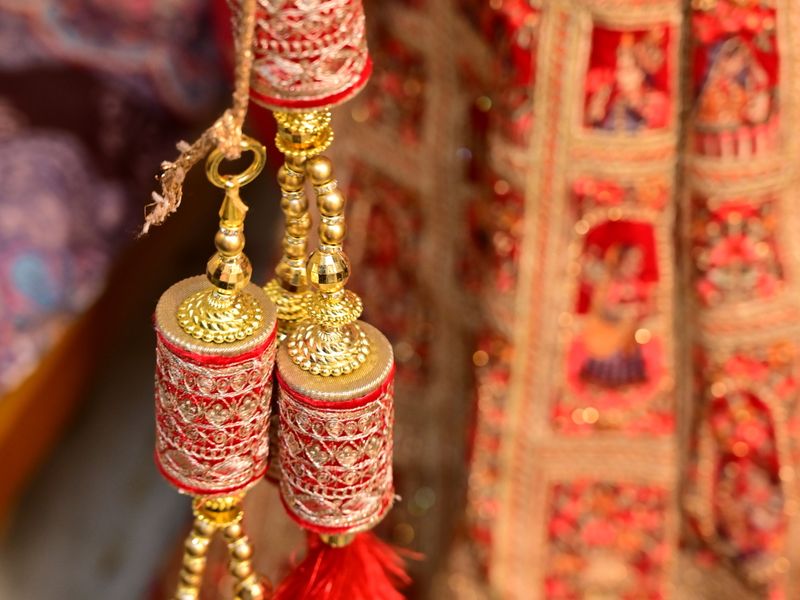
The maternal uncles commonly lead the Choora custom, while sisters and friends may help attach kaleere or join a kaleere-shaking game. Ask the bride what she actually wants. Heavy kaleere can catch on clothing and hurt her wrists; attach them carefully and shorten the photo sequence if she is uncomfortable.
Keep removed jewellery and packaging in a labelled pouch. Make sure the bride can use the bathroom, eat and handle her phone after the kaleere go on. Practical help is more valuable than another staged clip.
Baraat, Milni and Gurdwara
On the groom's side, do not let cousins turn the Baraat departure into an excuse to ignore the arrival time. Know which vehicle you are in and who gives the final move-forward signal. On the bride's side, know the welcome location and avoid pulling senior relatives out of the Milni line for photographs.
At the Gurdwara, cover your head, remove shoes, dress modestly and keep your phone silent. If you are helping guests who have never attended an Anand Karaj, explain the basics quietly at the entrance. Do not film from aisles, direct people across the prayer hall or reserve large areas without permission.
Speeches, songs and games
If you are speaking, agree a strict length — three to five minutes is usually plenty. Tell one story that shows your sibling's character, welcome their partner, and end warmly. Avoid ex-partners, private health information, family disputes, pregnancy speculation and jokes about money or "losing" a sibling.
For a Sangeet performance, choose a song and final cut early. Rehearse entrances and exits, not only choreography. Make sure older relatives know whether they are expected to dance.
Joota chupai may be familiar from wider North Indian weddings, but it is not a Sikh religious custom and not universal in Punjabi families. If the couple wants it, agree a playful maximum amount and a five-minute end point. Never hide footwear needed to enter or leave the Gurdwara safely.
What to wear
- Choose outfits you can sit, bend, walk quickly and help in.
- Wear modest clothing and a secure head covering at the Gurdwara.
- Break in footwear and keep a comfortable pair outside the prayer hall.
- Avoid sleeves, tassels or jewellery that catch on kaleere and dupattas.
- If changing, group the full second look in one labelled bag with a named carrier.
Your outfit should not depend on the bride or groom fixing it. Test the fastening, blouse, turban accessory or dupatta before the wedding week.
A useful emergency kit
- Safety pins in two sizes, fashion tape and tiny scissors permitted by the venue
- Tissues, blotting paper, stain wipe and unscented hand wipe
- Plasters and any pain relief your sibling already uses safely
- Hair pins, small comb and clear elastics
- Phone power bank and charging cable
- Water and a simple snack for travel outside the Gurdwara
- Printed contacts for coordinator, transport and photographer
Keep it compact and visible. Tell other people to bring their own medicines, chargers and footwear.
Eight gotchas to prevent
- You become the only person who understands the plan. Put it in the wedding timeline and name backups.
- Relatives bypass the couple through you. Do not promise changes; send decisions to the couple or coordinator.
- The preparation room fills with visitors. Use a kind but firm door rule.
- You are missing from sibling photographs because you are gathering everyone else. Appoint a separate photo caller.
- Kaleere are attached before the bride is practically ready. Check food, bathroom, phone and transport first.
- A speech becomes a surprise roast. Share the tone and boundaries with the couple.
- A game delays the ceremony or transport. Give it a time and money limit.
- You carry valuables in an open tote. Use the named valuables lead and record the handover.
Your boundary script
When someone gives you an unassigned problem, say:
"I am looking after the couple's room and the sibling photos. Our coordinator for transport/vendors/payments is [name] — please message them directly."
That is not rude. It protects the jobs you already agreed to do.
The best sister-of-the-bride or sister-of-the-groom is not everywhere. She is present in the places her sibling will remember.
Frequently asked questions
What does the sister of the bride do?
She may protect the bridal room, organise outfits and essentials, support Choora and kaleere customs, help gather people for key photographs, and stay close during the wedding and Doli.
What does the sister of the groom do?
She may help the groom prepare, coordinate siblings and cousins, keep the baraat moving, guide guests at the Gurdwara, and help welcome the bride.
Should the sister plan joota chupai?
Only if the couple wants it. It is a cultural game, not part of the Anand Karaj. Agree playful limits and never let it delay worship or transport.
What belongs in her emergency kit?
Pins, tape, tissues, plasters, familiar pain relief, stain wipes, a power bank, water for travel, a snack and essential contacts. Cash and jewellery need a separate, accountable owner.
Make the handover real
Put the person's name beside the task and time
A role guide only works when the family agrees who owns each moment. Add the handovers to your timeline, then send each person only the information they need.